

From over there to ova here...
After a gap of several years, AquaGen Scotland can once again receive salmon eggs from Norway. Deliveries from the only Norwegian facility allowed to export to the UK will improve security of supply and genetic choices, and enable AquaGen to offer out-of-season eggs to fish farmers.
The first import of Norwegian salmon eggs to Scotland for several years is paving the way for the introduction of essential new genetic material into breeding populations, ova producer AquaGen Scotland says.
The first consignment of ova from AquaGen’s cutting-edge Profunda facility arrived at its Holywood Breeding Centre near Dumfries on February 12 as a test run through logistics and documentation. The import was the result of several years of health testing and inspections leading to Profunda being agreed as a compartment with the relevant health status for export to the UK.
AquaGen Scotland says the development enables the application of advanced genomics based on data collected under UK conditions, supporting more accurate future selections and incorporating stocks with stronger representation of CMS (cardiomyopathy syndrome) resistance markers.

“Opening this channel allows AquaGen Scotland to gain access to the latest breeding developments (Generation 15) which will provide improvements in growth, survival, and specific resistance traits,” AquaGen Scotland managing director Keith Drynan tells Fish Farming Expert.
“Furthermore, the data which we have been collecting and continue to collect on performance of our strains in Scottish environmental conditions will be included in future selections from Profunda to ensure a flow of enhanced selection and improvement in the populations being held and multiplied from in Scotland.
Opening this channel allows AquaGen Scotland to gain access to the latest breeding developments which will provide improvements in growth, survival, and specific resistance traits
“As Profunda produces eggs on a year-round basis we now have the opportunity to place Q3 eggs in the Scottish market, with significant orders for 2026 already placed, however AquaGen remains committed to supporting the industry from its UK base of operations at Holywood, with further strategic developments planned.”
There is currently no vaccine for CMS, which often causes mortality late in the life cycle of salmon, and there is a focus in the Scottish salmon sector on breeding fish that are resistant to the disease.
Out-of-season eggs
AquaGen points out that its ability to export ova from Norway to Scotland will also provide vital backup supply options as well as facilitating out‑of‑season egg availability to meet the needs of the Scottish industry.
“Overall, these enhanced genetics will strengthen fish health, improve performance, and support Scotland’s long‑term ambition to maintain a resilient, competitive, and environmentally responsible salmon farming sector,” states AquaGen.
A ban on the export of Norwegian salmon ova was imposed in 2019 due to issues identified by European Union food safety authorities regarding the certification of so-called disease-free compartments in Norway.
Although there was no actual clinical disease detected, the surveillance and monitoring procedures to demonstrate that the areas where broodstock were farmed were free of disease were not considered adequate.

AquaGen’s Profunda facility, located at Barstadvik near Ørsta, central Norway, is the country’s only land-based, full-cycle broodstock and egg production facility, with a closed nucleus population and year-round production of eggs and milt.
The company says the facility features exceptionally high biosecurity, an independent water supply, and full control of all biological and technical parameters. Official approval for export from the Norwegian Food Safety Authority, WOAH (World Organisation for Animal Health) and the European Union sets Profunda apart as the only facility in Norway to achieve this level of certification.
The facility has been tested and documented free from the following serious pathogens: ISAV HPR-deleted, SAV, IHNV, VHSV, IPNV, PMCV, PRV, BKD, Yersinia ruckeri, Piscirickettsia salmonis, and Gyrodactylus salaris. The certification, which must be renewed annually, is based on extensive sampling and documentation, carried out primarily by the Norwegian Food Safety Authority (Mattilsynet) with support from the Norwegian Veterinary Institute, which serves as one of WOAH’s European Collaborating Centres for Epidemiology and Risk Assessment.
Internationally, Profunda is one of only a small number of facilities with documented freedom from listed diseases and full biosecurity control throughout the entire production cycle.
A significant milestone
“This is a long-awaited certification for us, and a significant milestone for everyone investing in land-based salmon production worldwide. Norwegian AquaGen eggs now have the potential to become a key resource in salmon farming globally. The certificate confirms both the quality and the biosecurity of AquaGen Profunda, and provides a solid foundation for further international growth and collaboration,” says Knut Røflo, chief executive of AquaGen Norway.
Although AquaGen can now import ova from Norway, it stresses its commitment to Holywood which currently produces around one third of the volume required in Scotland.
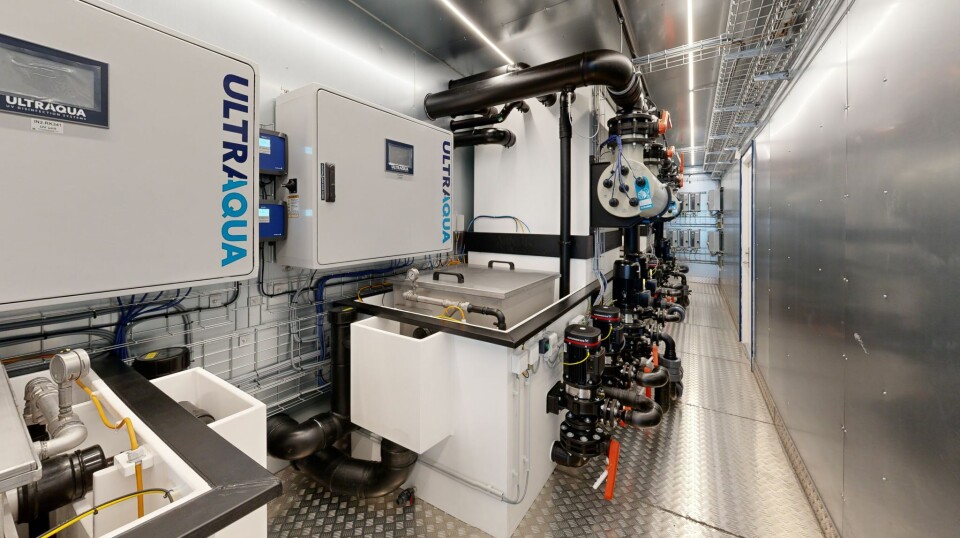
In 2024 Aquagen Scotland received £308,000 from Marine Fund Scotland towards the £616,000 cost of a recirculation system for egg incubation at Holywood, and officially opened the facility in September last year.
The company says it has made a significant investment to combat egg quality problems which had been experienced in prior years.
“With these [egg quality problems] behind us, investment continues on people, site and production as a critical part of the supply chain for Scotland’s biggest value food export.”
AquaGen’s customers include Scottish Sea Farms, which first began a collaboration in breeding from salmon grown at its own sites in 2021 as part of efforts to “future-proof” fish against problems caused by warming seas, and Cooke Scotland, which is also collaborating on a breeding programme.
