Record sales, but quality issues remain for Kingfish Company
The Netherlands land-based farmer has released a Q3 update. It reports good sales of the fish, but that it is still struggling with a lower than desired superior share.
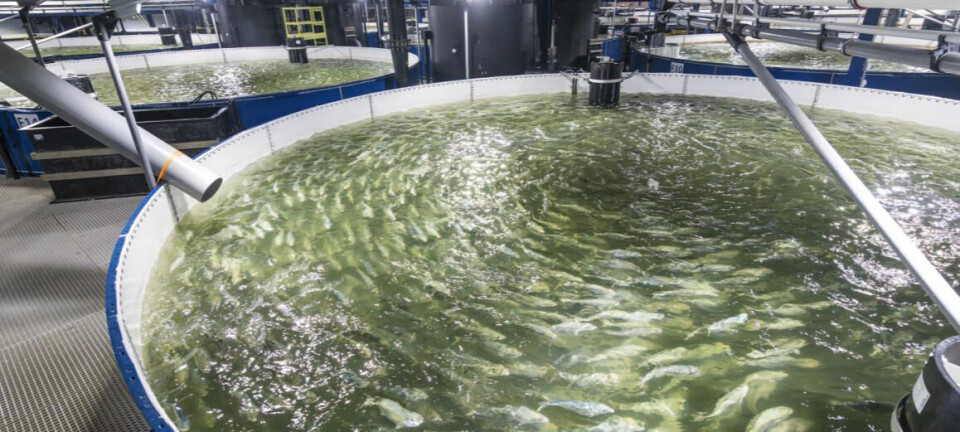
Kingfish Company, which produces yellowtail kingfish (Seriola lalandi) in a recirculating aquaculture system facility in Zeeland, says it delivered a quarter of strong operational and commercial progress.
"Continued growth in core European markets, combined with sustained improvements in farming performance, brings the company closer to full utilisation of its current production capacity," executives report.
Commercial development
The sales volume of 829 tonnes was a quarterly record, and an increase of 14% compared to 724 tonnes in the third quarter of 2025.
Adjusted for the sale of fresh fish in the US market, which was discontinued in 2025, volume growth on a comparable basis was 21%.
Quarterly revenue also reached a new record of €11.3 million, an increase of 12% from €10.1m in Q3 2025, or 20% on a comparable basis.
The company reports an average revenue per kilogram of €13.7, compared to €13.9 in the same period last year.
"The achieved price continued to be affected by a lower proportion of superior quality fish in the harvest volume. Underlying prices remained strong, and prices for superior quality fish increased by 3.5% from the previous year."
Significantly lower superior share
The company's production also reached a new quarterly record of 833 tonnes, 78 tonnes above the previous record of 755 tonnes from the first quarter of 2026.
"The high growth was achieved at the same time as a significant improvement in the economic feed conversion ratio (eFCR), which was 1.39 in the quarter," Kingfish Co writes.
"The results continue the positive trend observed since the first quarter of 2026, reflecting normalised production conditions and continued improvements in biological performance."
Standing biomass was 952 tonnes at the end of September, which the company says is still within the optimal operating range and with stable production conditions.
"As previously communicated, the superior share of the harvest volume in the third quarter was still significantly lower than normal. However, improvements have been observed in fish groups that are now in the growth phase, after corrective measures were implemented earlier this year," the company writes.
In a comment to LandbasedAQ, chief finance officer Jean-Charles Valette says that the company has deliberately not reported anything about profitability now.

“As we announced last year, we have transitioned to a reporting schedule where we publish operational updates for the first and third quarters, while full financial results are only published for the first half of the year and the full year. We will therefore not publish a more detailed financial report for the third quarter,” he says.
“Our quarterly operating updates focus on commercial and operational results, while profitability figures, including EBIT, are published in our half-yearly and annual reports,” he adds.
When asked about the lower superior share of fish, he says several factors may have contributed to this development.
"We have thoroughly analysed the changes that have been made over time in our farming practices and our operating routines, and have reversed some changes to return to the practices that previously yielded consistently high superior shares," he says.
He also emphasises that the company expects the superior share to gradually recover as the affected fish groups are replaced by new groups of better quality that are ready for harvest. He believes Kingfish Co will experience normal levels in the first half of 2027.
"We cannot provide more specific information about operations or additional figures beyond what has already been made public," he points out.
Outlook
In its press release, the company writes that the lower superior share is expected to continue to affect average revenue per kilo in the short term.
"However, the effect is expected to gradually decrease as better quality fish groups become ready for harvest in the fourth quarter of 2026 and the first half of 2027."
At the same time, the company expects increasing cost pressure.
"Continued limitations in the supply of marine raw materials, particularly fishmeal and fish oil, are expected to lead to higher feed costs in the coming periods."
Rising energy and transportation costs are also putting pressure on the company's underlying cost level.
The company says it is implementing measures to mitigate cost increases, including through optimisation of feed composition and additional operational and commercial initiatives, with the aim of counteracting cost growth and protecting profitability.