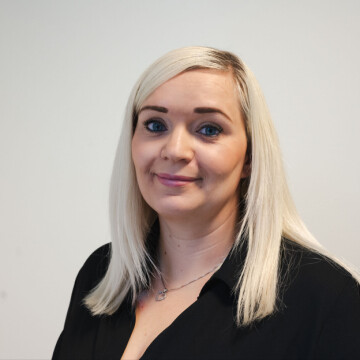
Rustan Lindqvist enters land-based plants while they are in their most demanding start-up phase. Once production is stable, he rushes on to the next project. And yes, that's the 64-year-old on a track bike. Motorcycling is his big hobby.Photo: Private
Once a plant is up and running, this expert gets on his bike
It's mission accomplished at Laxey for globetrotting Rustan Lindqvist. But the veteran of land-based fish farming is not sitting back. Now a new international task awaits.
Therese SoltveitThereseSoltveitJournalist & web editor, LandbasedAQ norway
Published
Ad
For Rustan Lindqvist, large fish tanks with high biomass and good fish health are signs that a land-based fish farm is functioning properly. It also means that his own job is nearing its end.
Ad
“When production is stable and the employees can continue on their own, my job is done. Then it's time for the next project,” he tells LandbasedAQ.
After two years in Iceland's Westman Islands, the 64-year-old has completed his assignment as aquaculture director in Laxey. The facility is now operational, the biomass has been built up and the organisation is ready to continue the work.
Several actors have already made contact, but Lindqvist will not yet say where the next assignment will be.
"Satisfaction is the first word that comes to mind when I try to describe what it's like to leave a facility after such a period. Through different positions and projects, you learn that there are always new challenges waiting around the next corner. You're never really done. Finishing and moving on is part of being successful," says Lindqvist.
Laxey's land-based facility in the Westman Islands is being expanded in stages and, according to current plans, will have the capacity to produce around 35,000 gutted weight tonnes annually.Photo: Private
Mission Laxey
Laxey operates a land-based flow-through Atlantic salmon farm on Heimaey, largest of the Westman Islands off the south coast of Iceland. The facility is being expanded in stages and, according to current plans, will have an annual production capacity of around 35,000 gutted weight tonnes of salmon when all six construction phases are complete.
The first salmon were harvested in November 2025, 23 months after the first batch of eggs arrived at the facility. Since then, the company has been harvesting fish weekly.
Before Lindqvist formally took up the position of aquaculture director on September 1, 2024, the Swede was already engaged as a consultant, contributing to technical design and planning. The task was to get the food fish facility up and running as quickly as possible. This included adjusting the installed technology, recruiting and training employees, and building the biomass in line with the company's plans.
More than technology
“Getting a plant up and running is about much more than just starting the technology. The systems need to be adjusted, the right people need to be hired and trained, and the biomass needs to be built up according to plan. All of this needs to work at the same time,” he explains.
The result after two years was better than expected.
"The work at Laxey has been successful, in fact better than my own expectations. When I say the mission is complete, it means that the plant and the employees can now continue production as planned, without being dependent on my support," says Lindqvist.
The assignment was completed at the end of August 2026, but the development of Laxey continues. More systems will be put into operation, while biomass will be increased to levels the company has not previously had.
"Laxey is in continuous growth. It will still be demanding to add new systems and at the same time increase biomass, but the situation today looks very promising," says Lindqvist.
Rustan Lindqvist believes the trend towards larger production units will continue. "I can imagine even larger units becoming part of the strategy going forward. Tanks of 10,000 cubic metres are probably the next level."Photo: Pål Mugaas Jensen
The fish come first
Regardless of country and project, the condition of the fish is the most important measure of whether the work has been successful.
“I have always been completely committed to healthy fish, and it is even more important to me today. At Laxey, the facility is now filled with large and fine fish, with high biomass and very good health status,” he says.
It is precisely the combination of lots of fish and good fish health that makes the results in Iceland special for Lindqvist.
"This is the gold star on my CV. High biomass and fresh fish are also some of the most difficult things to achieve in a large land-based facility," he emphasises.
The tanks at Laxey are 5,000 cubic metres. Earlier in his career, Lindqvist worked with smolt production in 250m³ tanks in Norway. Later, 1,000m³ tanks awaited him in his role as operations manager at Skagen Salmon in Denmark.
The transition to larger units in Denmark brought with it new questions, particularly about how large quantities of fish would react when the water level was lowered and the biomass was pumped.
"How the high biomass would react to reduced water levels and pumping was my biggest concern. The experience was that the fish handled it well. I believe this was largely due to the fact that the systems provided a calm environment with little stress," explains Lindqvist.
At Skagen Salmon in northern Jutland, Denmark, Lindqvist gained experience with much larger production units than he had previously worked with in Norwegian smolt production.Photo: Pål Mugaas Jensen
When he moved on to Iceland and tanks that were five times larger, Lindqvist was less concerned.
“The experience from Skagen Salmon was very useful at Laxey. After some adjustments in how we handled the large fish, it has also worked well in the 5,000m³ tanks,” he says.
The trend towards larger production units will continue, Lindqvist believes.
"I can imagine even larger units becoming part of the strategy going forward. Tanks of 10,000m³ are probably the next level."
Different culture
Technology and biology weren't the only challenges during the startup in Iceland. Differences in work and business culture also required adaptation.
Throughout his career, Lindqvist has spent a lot of time learning how to best follow up on employees and how organisations can be built around production. His experience comes largely from Sweden and Norway.
“Of course, all countries and regions have different cultures. I discovered that the Scandinavian mentality was not as widespread in Iceland as I had expected. This made the work of improvements more demanding,” says Lindqvist.
Accommodating cultural differences thus became part of the start-up, as did technical adjustments, training and biomass build-up.
Early start
Lindqvist's path into the aquaculture industry began long before land-based salmon farming and recirculating aquaculture system facilities became an international industry.
He grew up in Gothenburg, close to aquafeed producer Ewos' experimental facility Laxforsen. From the age of seven, Lindqvist spent a lot of time at the facility. He also often to the river with his father to fish.
"I have wonderful memories from there (Laxforsen). When I was 16, I had my first internship at the facility, and later I got a job there," he recalls.
Working in fish farming was not necessarily considered a safe career path at the time. The family was divided on Lindqvist's choice, but his father, who was very interested in hunting and fishing, gave his support.
“My father was the only one who supported the decision. I wish he had seen what it has led to today,” says Lindqvist.
Rustan Lindqvist started his career at the Lindome wastewater treatment plant in Sweden, where he was to run fish farming. His interest in fish later led him to projects in a number of countries.Photo: Harry Moum/Mölndal's city museum.
With a mechanical education and experience from what he himself refers to as "the hard school of life", Lindqvist started his first company in 1981. There he produced trout for sport fishing.
The following decades brought both ups and downs, including as a result of furunculosis and Gyrodactylus salaris. Around the turn of the millennium, he owned and operated what he describes as Sweden's largest hatchery.
His path later took him from entrepreneur to employee, and around 2008 Lindqvist moved to Norway to work with salmon.
"It was the right choice. I should have done it earlier," he says.
Around the turn of the millennium, Lindqvist owned and operated what he describes as Sweden's largest hatchery. The photo shows Svensk Regnbågslax AB in 2001.Photo: Private
Focus on land
After five years of smolt production in Helgeland, Lindqvist was convinced that large fish farms in the future would increasingly be built on land. Experience from sea-based farming had shown how great the risk is of being dependent on natural conditions.
“On land, you can keep nature out to a certain extent and maintain control. The result depends more on what you do yourself, rather than having to hope that nature will play along,” he explains.
Even then, he envisioned that the facilities and production units would become increasingly larger.
“As values increase, they also need to be better protected. I saw land-based farming as the way forward for the large production facilities,” says Lindqvist.
To the Gobi Desert
In 2014, Lindqvist travelled to Xinjiang Province in China with his family. The assignment was to start a new RAS facility for trout and salmon in the Gobi Desert.
The family lived in the province for two years. An important part of the work was training university students so that they could take over the operation of the plant.
“We lived in a remote location, got to know the culture and trained the students who would continue to run the facility,” he says.
The stay also highlighted a need in the growing land-based industry. New facilities needed people with practical experience who could support the organisation through the demanding period from completion and start-up to stable production. This became the basis for Lindqvist's consulting company RAS 365 AB.
“The idea is to provide production advice and support through the turbulent period from the plant being put into operation until production is stable. It has been shown that the need for this type of support is real,” says Lindqvist.
Learning from mistakes
The assignments have since taken Lindqvist to facilities in Sweden, Norway, Denmark, China, Japan, South Korea, and Iceland.
Among the projects was the early planning of Nordic Aqua Partners' land-based facility in China. After about two years, Lindqvist resigned when his mother became ill. Instead of moving back to China, he stayed in Sweden to care for her.
"I lost the opportunity to follow the exciting project further, but it was right to stay home," he says.
Through RAS 365, Lindqvist later worked on several projects simultaneously. In addition to his role as operations manager at Skagen Salmon, he provided production support to Fortum in Sweden in connection with a wild salmon conservation program at a new RAS facility. The work also included Mirai's land-based trout facility in Japan, which has an annual capacity of 400 tonnes, and a new facility in South Korea during start-up and production.
"The common thread throughout the assignments has been to find out what doesn't work, so that we can avoid repeating the same mistakes. It has given me incredibly useful learning," says Lindqvist.
Lindqvist is also a co-owner and board member of Ecofisk, which has been working on plans for a large land-based facility in the Haugesund area. The project received a site and permit, but financing proved challenging.
In his opinion, the project entered the market a year too late. The Covid pandemic, the war in Ukraine, and changed tax conditions contributed to dampening investment appetite.
"I think many land-based projects have the same experience from this period," he points out.
Rustan Lindqvist (in the orange jacket) during a tour of Laxey's facility in 2025. Representatives from AKVA group and Laxey's chief operations officer Hallgrimur Steinsson were on the visit.Photo: Therese Soltveit
Believes in Iceland's potential
After two years in the Westman Islands, Lindqvist is optimistic about further growth in land-based farming in Iceland. In his opinion, the natural resources and temperature conditions provide good conditions for salmon production.
"Iceland has very good natural resources, and the temperature window is well suited for salmon," he says.
Several large onshore projects are under development in the country. If they are realised and come into stable operation, production volumes could be significant.
“There are a handful of large projects on the way. When these are operational, the volumes will be large,” says Lindqvist.
Internationally, Lindqvist sees the greatest growth potential in Asia, with China at the forefront.
"The economic system allows large resources to be mobilised once a decision has been made," he explains.
In his view, technology is no longer the biggest limitation. A stable water source is crucial, but equally important is access to managers and employees with experience from start-ups and scale-ups.
“The technology has been developed and has been shown to work. The two most important prerequisites are a reliable water source and experienced management,” says Lindqvist.
When several large facilities are to be built and put into operation simultaneously, the lack of this expertise can become a bottleneck.
“It is not the market, technology or financing that will limit growth the most. It is the lack of experienced people,” he emphasises.
In his spare time, Rustan Lindqvist likes to swap fish tanks and production plans for a Honda CBR1000RR Fireblade in Repsol livery. The bike is inspired by MotoGP rider Marc Márquez and has the number 93.Photo: Private
Petrol-head
For now, Lindqvist still lives in Iceland, but moving may become an option when the next contract is signed.
The family is used to this way of life. Lindqvist is married and has a daughter who will soon be 13. Travel and extended stays in remote places have been a part of family life for several years.
“My family has an open view of where home is. We have travelled a lot in recent years, and it has always been clear that our lives would largely be about travelling and living in remote places,” he says.
Back home in Sweden, free time is often spent on another interest. Motorcycles have been an important part of Lindqvist's life since the age of ten, and today the collection consists of several classic Honda motorcycles.
The interest started with motocross. Lindqvist recently also got a road racing licence to be able to race on the track.
“It's about having fun on the racetrack. Motorcycling is a hobby that keeps you sharp,” he says.
The collection also includes a Honda CBR1000RR Fireblade in Repsol livery. Lindqvist has followed MotoGP for many years, and Marc Márquez has long been a favourite.
“Marc rode Honda for many years, and the Repsol edition became an iconic bike that I just had to own and ride. If you want to experience what fast motorcycling is like on a race track, this is the bike you’re looking for,” says Lindqvist.